A Foundation for Transformation: Civitas’ Two-Decade Vision for Denver’s Santa Fe Yards and Broadway Station

Case Studies

For more than 20 years, Civitas has partnered with the City of Denver to reimagine one of the most complex and opportunity-rich sites in the metro area: the former Gates Rubber Factory. Today, as the site is being considered for a transformative new district anchored by a National Women’s Soccer League (NWSL) stadium, we see the real promise of a long, deliberate, and collaborative process coming to life. This moment is not accidental—it’s the result of decades of groundwork laid through an urban design approach that aligns community sentiment, urban form, redevelopment flexibility, and economic resilience.

At Civitas, we don’t begin with designs. We begin with the underpinnings: the urban design frameworks, community voices, economic realities, and public-private dynamics that make great design possible. Our work on the Gates site is a clear reflection of that approach.
A Site of Historic Weight and Enormous Potential

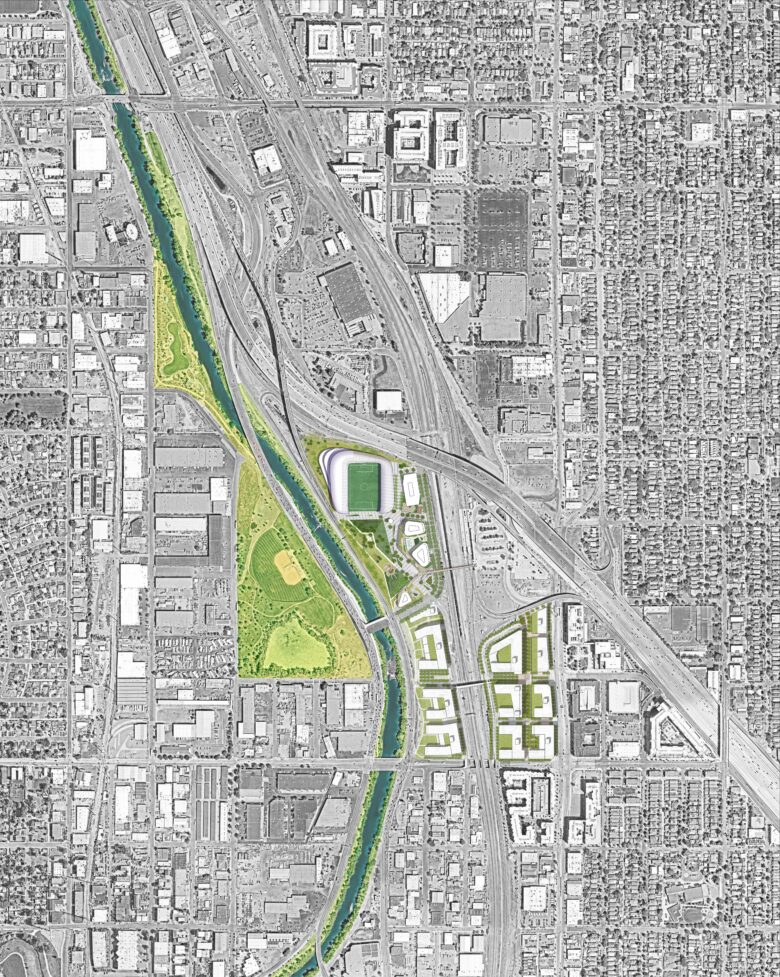
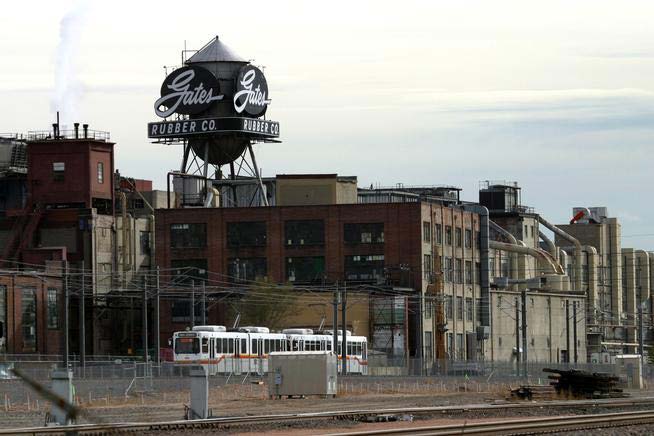
Since 1911, the Gates Rubber Factory had represented Denver’s industrial strength, occupying a massive riverfront footprint just south of downtown that would, over time, align with major urban thoroughfares including I-25 and light rail. The site was embedded within a diverse and growing city, yet over time it grew increasingly disconnected. The river, rail lines and highways became barriers rather than connectors. When the manufacturing plant closed in 1991, it left behind more than just physical remnants. It left behind environmental challenges, fractured communities, and a big question: What could this land become?

We have known from our experience in bringing brownfields back to life in Stapleton, San Diego and beyond that the answer was never going to be simple. In fact, multiple developers have come forward with ideas yet to be realized, proving that this is complicated—as are most (if not all) projects of this scale. But the City of Denver has remained committed to finding the right solution, and Civitas has continued to play a role as a trusted advisor in that process.

Designing from the Ground Up: An Urban Design Approach

When the City brought us on board, we knew that a conventional planning and zoning process wouldn’t be enough. Under Mark Johnson’s leadership in the early 2000s, we’d already closely studied the site on behalf of the Gates Corporation—commissioned to evaluate the site’s future potential and inform their decision making as they considered development or sale. This study followed another developer’s previous efforts, which never gained traction thanks to the site’s environmental challenges and other civic complexities. With this experience, we understood first-hand that the success of this site required more than high density entitlements. It needed a vision grounded in sound urban design principles that would reconnect the site to itself and the surrounding neighborhoods.

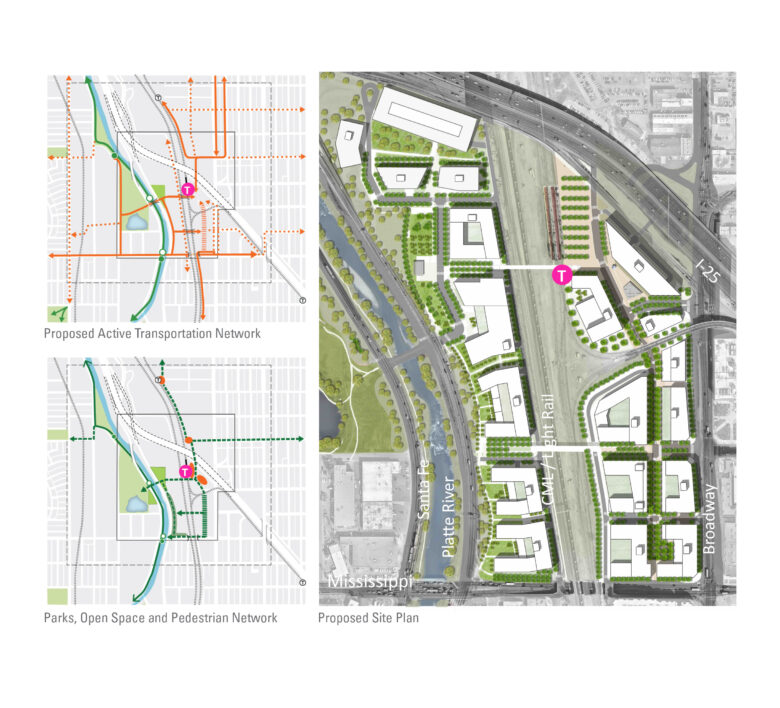
Civitas was hired by the City of Denver in 2014 to lead the I-25 and Broadway Station Area Plan. Civitas principal Chris Parezo served as the project manager—leading community members, stakeholders, city agencies and a consultant team composed of planners, urban designers, civil engineers, transportation planners, economists, and public/private finance experts to establish a vision for a connected, resilient, vibrant and transformative multi-modal hub that would knit this land back into the fabric of the city and remain viable and strong through multiple market cycles.

Informed by our public engagement process, the plan set up the physical, economic, and social conditions for development ideas to emerge and thrive, along with specific recommendations and policy direction to guide decision making. It established guiding principles and provided the city with clear assurances about the future urban fabric and form, while also giving private developers the room to innovate and respond to shifting market needs. It’s this balance that makes the plan—officially adopted by the City of Denver in April 2016—uniquely durable. And it’s this same flexibility that now allows for the exciting possibility of a new NWSL stadium district on the site.

Setting the Stage for the NWSL and Beyond

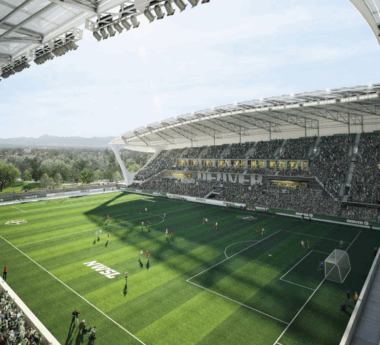
The consideration of a women’s professional soccer stadium on the Gates site is an affirmation that the original Area Plan created the conditions for precisely this kind of catalytic project. The stadium proposal reflects the very type of civic energy the plan envisioned. With adjacency to light rail, walkable streets, and mixed-use potential, a stadium district becomes feasible. And it’s built upon the foundations laid by an urban design strategy that saw beyond static zoning and instead imagined a vibrant and adaptable urban fabric.

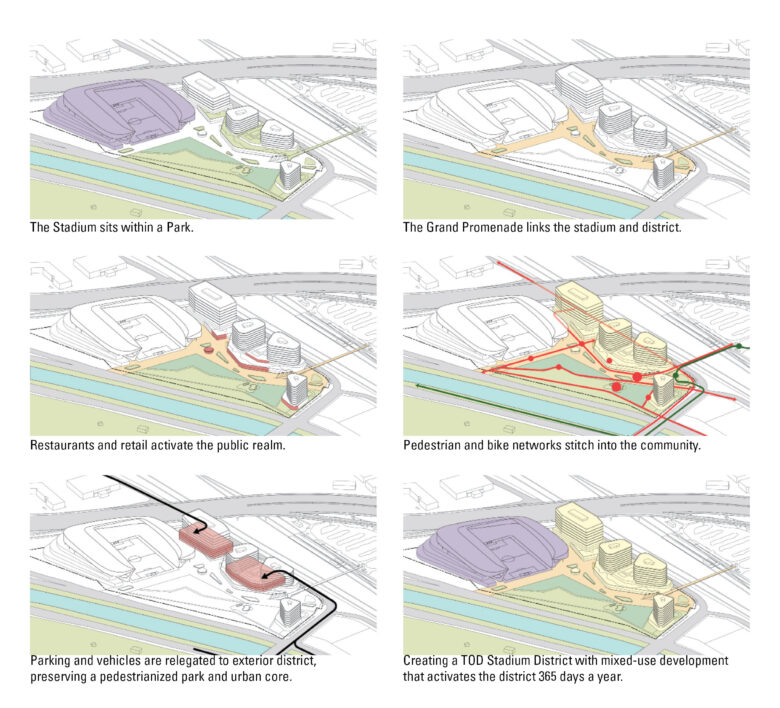
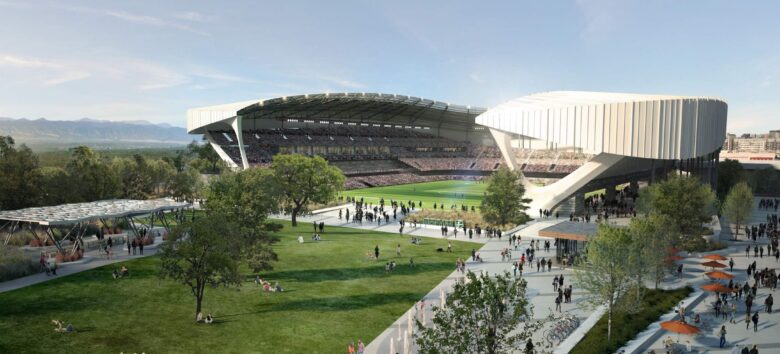
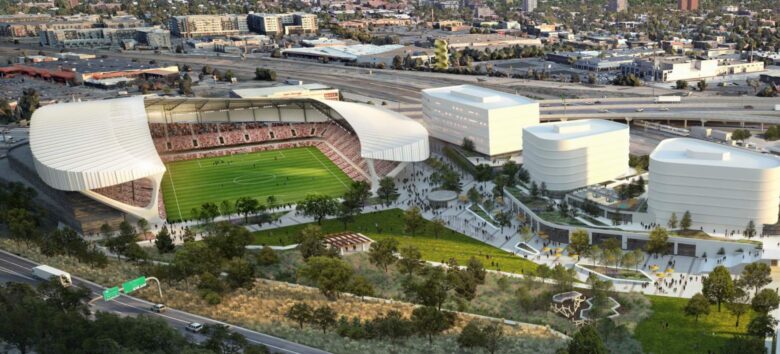
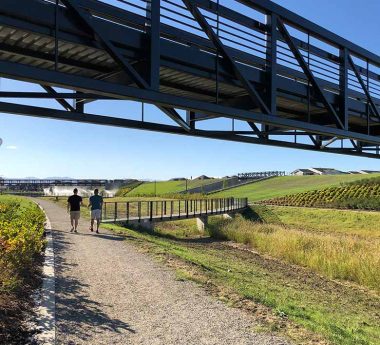
The district design parti starts with the notion of creating a central NWSL stadium as an anchor that sits within a park. A grand promenade links the stadium and stadium district with other developments on adjacent parcels within the former Gates property. There’s river access and unparalleled mountain views, along with pedestrian and bike networks that link special moments within the site and stitch it with the surrounding communities. Active ground floor edges front the park and urban plazas; and retail, restaurants and ‘outdoor rooms’ create an entertainment district unlike anything else in Colorado’s front range—all coming together to create a 365-days-a-year destination for locals and visitors alike, well beyond NWSL game days.

A Trusted Partner Across Public and Private Sectors

For decades, Civitas has served as a bridge between municipalities and developers, between neighborhoods and institutions, and between vision and execution. Our experience working with both public agencies and private partners means we understand how to dig deeper, asking the difficult questions necessary to uncover the underlying issues, then working hard to build consensus through a design and placemaking lens that aligns differing interests.

We’ve worked with adjacent communities spanning the economic spectrum from high-wealth districts to underserved neighborhoods. Success depends not only on what gets built, but on how people are engaged in the process. From public workshops to one-on-one stakeholder conversations, our role is to listen, understand, synthesize, and translate the communities’ stories, needs, and desires into meaningful design outcomes. In doing so, we’ve helped maintain alignment over decades of change.

The Power of Integration: Design, Planning, Economics, and Politics

We don’t view urban design as separate from economics or planning or politics—it lives at the intersection of all three. On the former Gates site, we’ve demonstrated how this integrated mindset supports not just a better design outcome, but a more viable and resilient development process.

At Civitas, we often say that we design cities for people. The hard truth is that a plan disconnected from economic realities won’t be built. A vision without political buy-in won’t last. And a strategy that doesn’t reflect community values won’t be loved. Success comes when we can navigate all these realms together. With the potential for a new stadium district, we’re excited to see this site gain regional and national attention. But just as importantly, we’re focused on ensuring that the redevelopment serves local communities, creates lasting economic opportunities, and adds richness to Denver’s urban life.

For decades, this site—once industrial and inaccessible—has challenged us. The potential arrival of the NWSL proves it’s ready to become a true part of the city again.