Envisioning a Framework for Transformation
Broadway Station Area PlanDenver, CO—USA
Led by Civitas for the City of Denver, the plan aligned community priorities with placemaking strategies, infrastructure systems, and development scenarios to reknit a historically fragmented landscape into the fabric of the city. Rather than prescribing a fixed outcome, the plan created the physical, economic, and investment strategies that set the stage for transformation, creating assurances for the city while allowing flexibility for development to adapt to market conditions. It continues to shape the site’s evolution today, demonstrating the lasting value of a clear and adaptable urban design framework.
Year
In Implementation
Client
City of Denver
Services
Vision Planning, Urban Design
Project type/category
City Planning, Civic/Municipal, Sports & Entertainment, Transit Oriented Development, Urban District
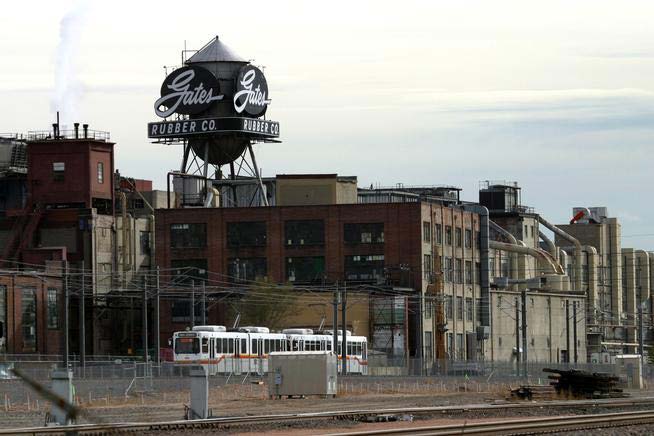
For decades, the area surrounding Denver’s I-25 and Broadway Station stood as one of the city’s most promising yet challenging sites. Once home to the Gates Rubber Company, the land had become a void in the urban fabric, defined by vacant parcels, environmental constraints, and inflexible boundaries including I-25, rail corridors, and the South Platte River. These conditions physically and socially disconnected adjacent neighborhoods from one another and from the land itself.
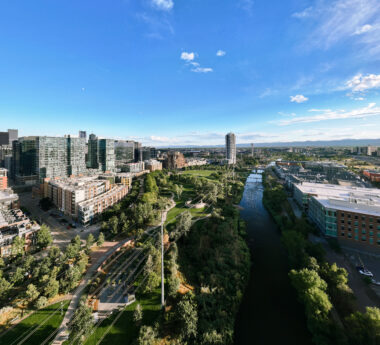
At the same time, the site held extraordinary potential, offering a rare opportunity to transform underutilized land into a connected, mixed-use district centered on mobility, access, and community life. The challenge was not simply to design a place, but to establish the long-term framework that could guide its evolution through uncertainty, over time, and across multiple market cycles.
Leading a Collaborative Vision
Civitas was engaged by the City of Denver to lead the I-25 and Broadway Station Area Plan, guiding a diverse consultant team and working closely with city agencies, property owners, and community stakeholders to shape a shared vision for the site.
This effort brought together planners, urban designers, engineers, economists, and public/private finance experts. Through an extensive public process that included workshops, walking audits, and stakeholder discussions, the team worked to align community priorities with technical realities and long-term opportunity.
The result was not a fixed design, but a flexible and durable framework informed by the voices of the surrounding neighborhoods and rooted in the economic and infrastructural forces shaping the site.
Building the Underpinnings for Change
Rather than prescribing a singular outcome, Civitas structured the plan around a set of guiding principles and interconnected frameworks designed to enable transformation over time.
At its core was a vision for a connected, resilient, vibrant, and transformative multi-modal hub that would reknit the station area into the fabric of the city while accommodating future growth and change.
Key strategies included:
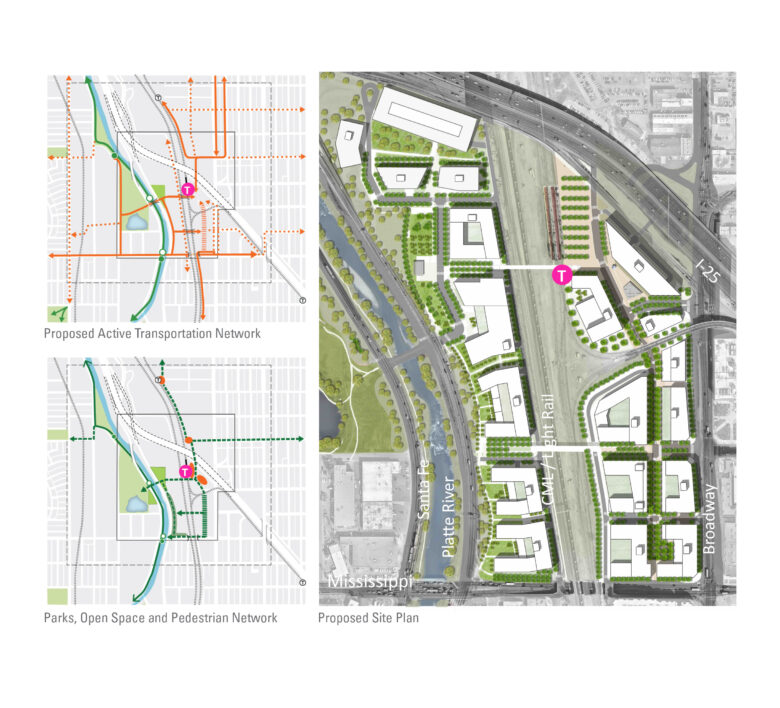
- Reknitting the Urban Fabric: A new network of streets and connections was proposed to overcome physical barriers and link the former Gates site with surrounding neighborhoods—restoring continuity where fragmentation once defined the landscape.
- Establishing a Multi-Modal Hub: The plan reimagined Broadway Station from a park-and-ride facility into an integrated transit-oriented district—prioritizing walkability, bike access, transit connectivity, and seamless movement across modes.
- Creating a Network of Parks and Open Space: A system of civic spaces, neighborhood parks, and regional trail connections was designed to link people to place—extending Denver’s “City in a Park” vision into the station area while supporting health, ecology, and social life.
- Embedding Resilience and Flexibility: The plan balanced clear urban design direction with the flexibility needed to respond to shifting market conditions—supporting phased development, diverse land uses, and long-term economic viability.
This layered approach ensured that the plan could guide both public investment and private development, setting expectations for urban form while allowing innovation to emerge over time.
A Durable Framework Realized Over Time
Adopted unanimously by the City of Denver in April 2016, the I-25 and Broadway Station Area Plan established a clear, city-supported vision for one of Denver’s most complex and consequential redevelopment sites.
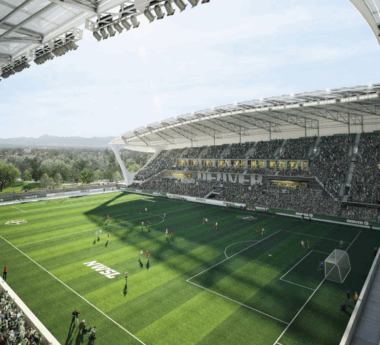
In December 2025, Denver City Council approved the development of a stadium for the new Denver Summit soccer team within the district, underscoring the strength and durability of the original framework. By aligning community priorities, infrastructure investment, and long-term development flexibility, the plan created the conditions for transformative opportunities like this to emerge, even years after its adoption.