Belonging in Nature
Alpine ParkCalgary, Alberta—Canada
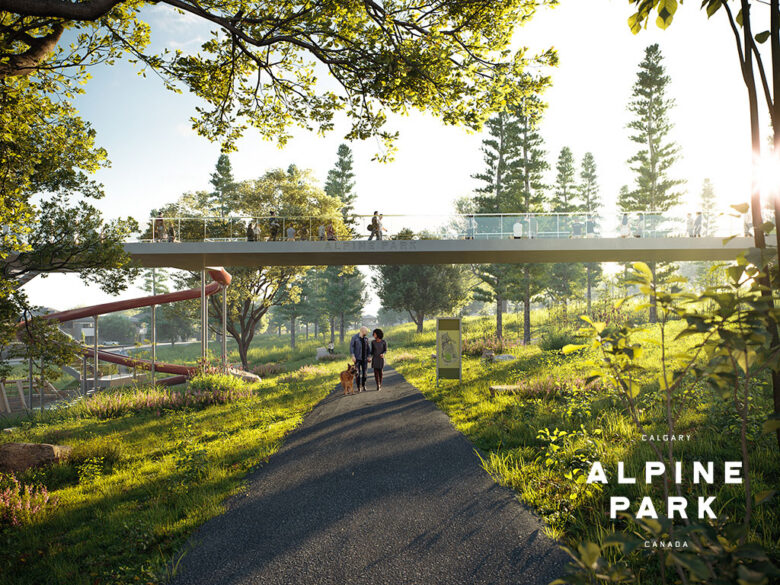
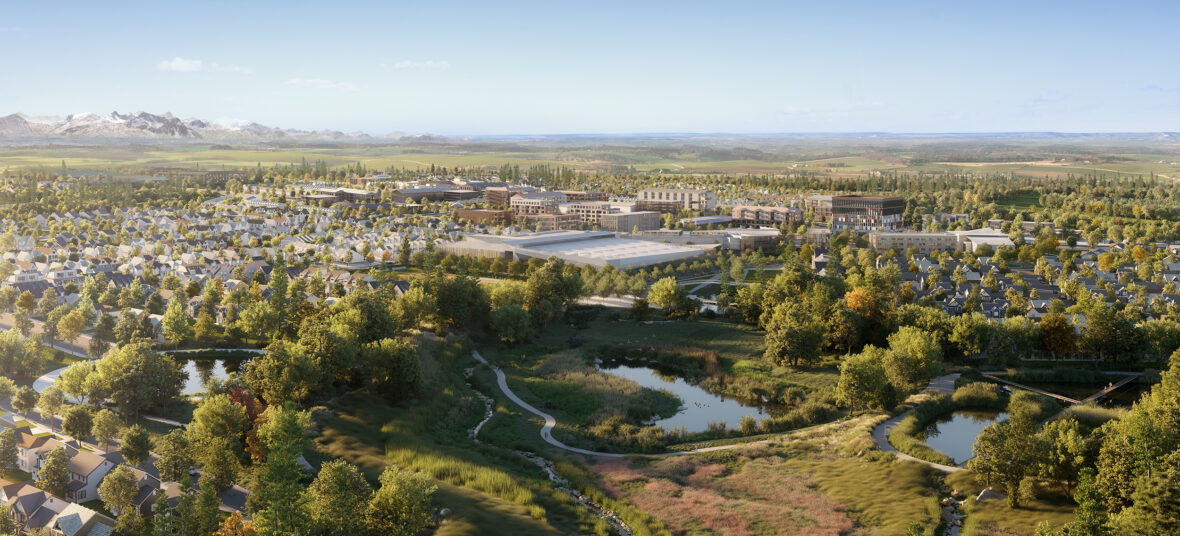
Located in southwest Calgary, the master-planned community challenged conventional suburban development by prioritizing an interconnected public realm over private space, creating opportunities for people to move through the neighborhood on foot while remaining immersed in a continuous landscape experience.
Year
In Implementation
Client
Dream
Services
Vision Planning, Landscape Architecture
Project type/category
Community Planning & Development, Parks & Recreation

Dream engaged Civitas early in the planning process to help establish this vision, drawing on the firm’s experience shaping Stapleton (now Central Park) in Denver. Working alongside a broad multidisciplinary team including HDR and Stantec, Civitas helped develop the community-wide open space framework, determining the location, character, and connectivity of parks, green courts, trails, and natural areas. Civitas subsequently prepared concept designs for the open space system and developed a comprehensive Open Space Style Guide that established the aesthetic and experiential foundation for future implementation.
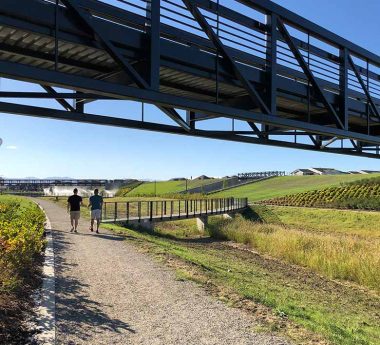
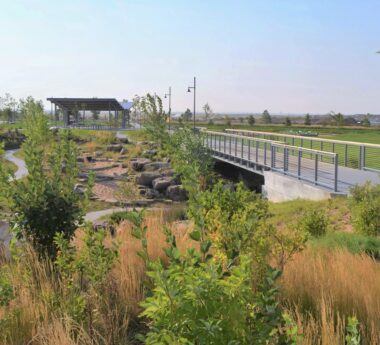
At the heart of the vision was a simple idea: residents should be able to walk through much of the community without ever truly leaving the park system. A network of green corridors, mid-block connections, shared courts, and pedestrian-focused routes links neighborhoods to destinations throughout Alpine Park, encouraging everyday movement, social interaction, and reduced reliance on automobiles. Even the community’s stormwater infrastructure was conceived as part of this experience, with trails and tree-lined promenades transforming functional systems into public amenities.
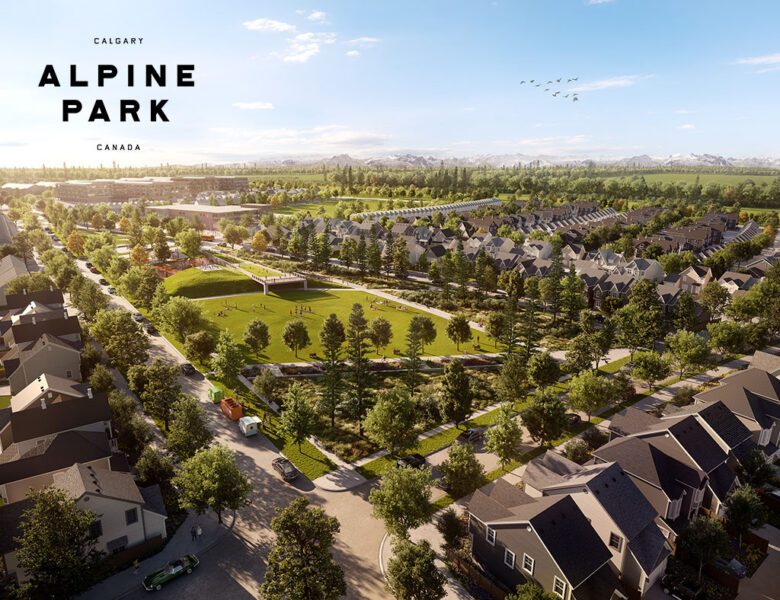
The design language takes inspiration from Alberta’s native landscapes, blending prairie ecology with the character of alpine environments. Civitas advocated for preserving an existing poplar bluff that had initially been slated for removal, transforming it into a defining community asset and establishing a planting vocabulary inspired by native aspens, conifers, grasses, and alpine meadows. Throughout the community, landscape spaces balance what the design team described as a “refined rustic” character, pairing natural materials, local stone, and woodland planting with bold colors, contemporary forms, and carefully curated gathering spaces.
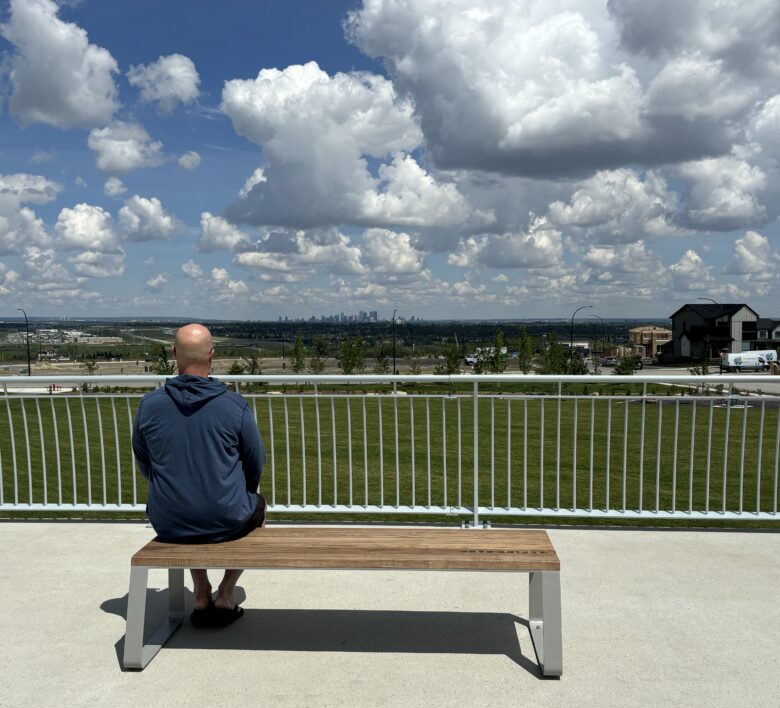
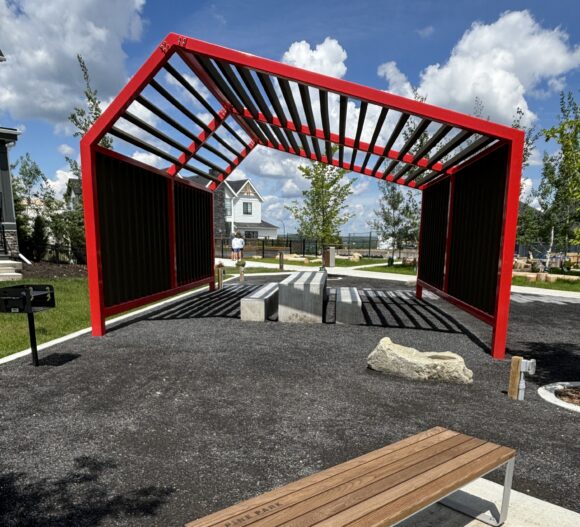

Distinctive destinations throughout the open space system create moments of discovery and identity.
- A canopy walk threads through preserved woodland, offering elevated views and immersive play experiences.
- Forest Grove reinterprets the nearby aspen woodland as an artful pedestrian corridor, where polished boulders reflect the sky and tree canopy above.
- Harvest Park brings neighbors together around community gardens, orchard plantings, and a 10-meter harvest table.
- Painted Plaza transforms a utility corridor into a playful public space through colorful graphics and interactive games.
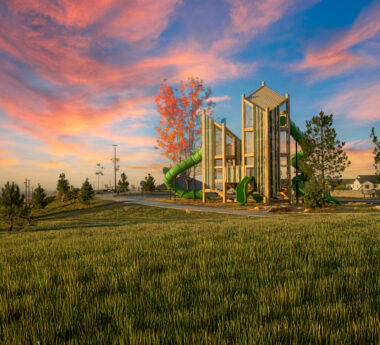
- Nature-inspired play experiences, including the sculptural Nautilus Playground, encourage exploration while remaining integrated into the surrounding landscape.
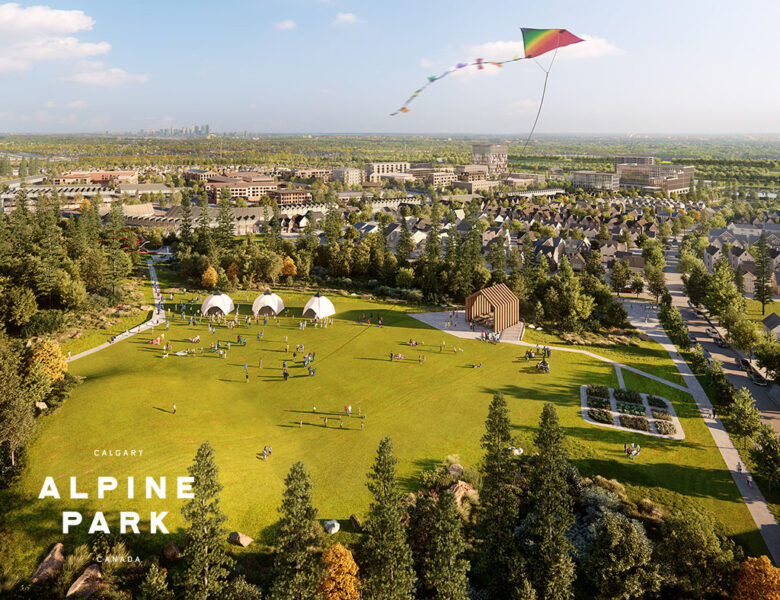
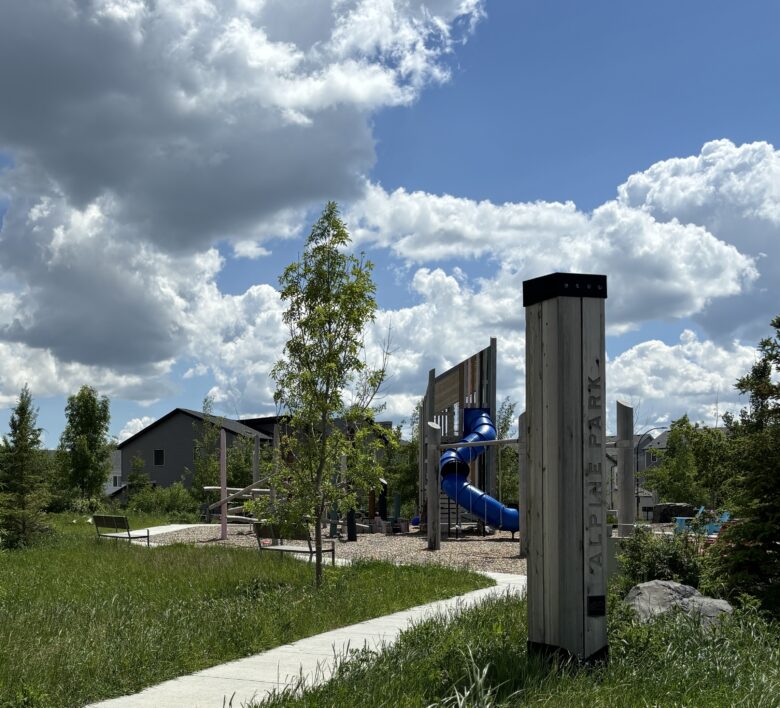
Today, Alpine Park demonstrates how thoughtful planning, collaborative design, and a shared commitment to quality can create a neighborhood where nature is not simply preserved around development—it becomes the organizing framework for community life.
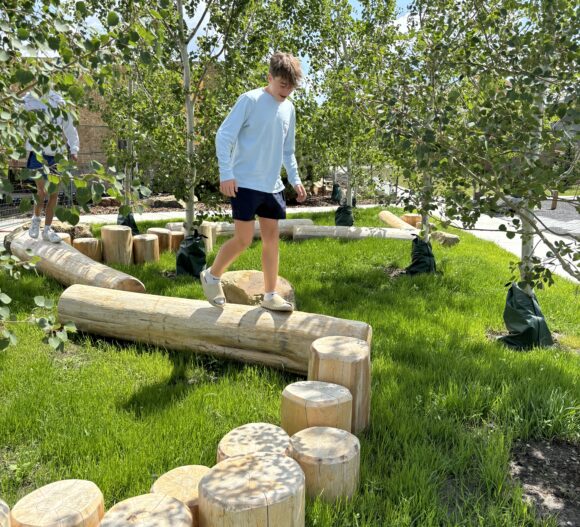
Dream approached the project with the ambition to build on lessons learned from precedent-setting communities such as Stapleton while pushing those ideas further, embracing a more naturalized landscape character, stronger ecological expression, and a public realm designed to support everyday connection. Through a highly collaborative process that prioritized collective ownership over individual authorship, the project team established a shared vision that has remained remarkably consistent through implementation. The result is a community where residents can experience the character of Alberta’s landscapes as part of daily life—a place that feels simultaneously wild and welcoming, refined and rustic, and deeply connected to both nature and neighborhood.